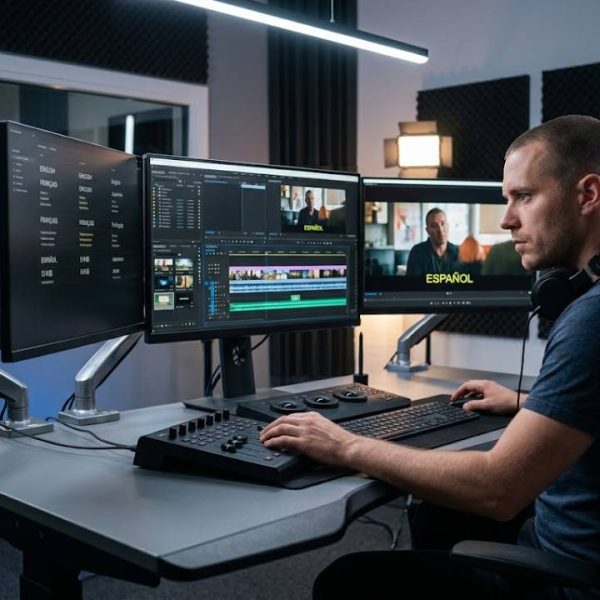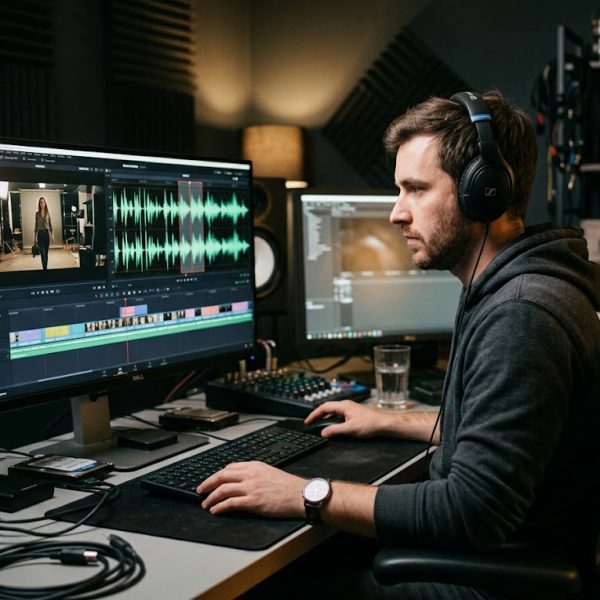
Streaming platforms used to treat subtitles as an afterthought, something bolted on once a show or film was already finished. That has changed completely. Today, a series can launch in a dozen languages on day one, and the subtitling and captioning work behind that launch has become almost as complex as the production itself.
What surprises a lot of production teams is how much of that complexity has nothing to do with translating dialogue. It's about contracts with international distributors, requests for specific regional languages nobody budgeted for, and legal paperwork that has to be verifiable, not just accurate.
When a distribution deal needs more than a good translator
Licensing agreements between studios and international distributors are usually written and negotiated in one language, then need to be understood and enforceable in several others. When those agreements involve financial terms, rights windows, or liability clauses, an informal translation isn't enough. That's when certified document translation services become part of the production pipeline rather than an afterthought, because a distributor's legal team will often reject a contract translation that doesn't carry a formal attestation of accuracy.
Chasing the Portuguese-speaking audience
Few markets have grown as fast for streaming content as Portuguese-speaking audiences, split across Brazil and Portugal with their own regional expectations. A platform that treats Portuguese subtitles as a single, generic file often gets complaints about tone or regional vocabulary within days of launch. Getting certified portuguese translation for scripts and legal releases, rather than a quick pass by a freelancer, tends to prevent both the audience complaints and the compliance headaches that come with rushed regional releases.
The market nobody planned for two years ago
Demand for Ukrainian-language content and subtitling has grown quickly, driven by both a large diaspora audience and renewed interest in Ukrainian film and television. Studios and captioning agencies that didn't have an english to ukrainian translator on retainer two years ago are now building out that capability from scratch, often on tight production timelines that don't leave much room for trial and error.
According to the overview of subtitling and captioning standards on Wikipedia, accuracy and timing requirements for subtitles vary significantly by market and platform, which is part of why a one-size-fits-all approach to language services rarely holds up once a title goes truly global.
Building a language pipeline instead of reacting title by title
Agencies and platforms that handle this well don't treat each new language as a separate emergency. They map out, ahead of a launch, which materials need certified translation for legal purposes, which regional audiences need dedicated subtitling attention rather than a shared script, and which emerging-demand languages are worth building a standing relationship with a specialized translator for, instead of sourcing one under deadline pressure.
What this looks like for a growing captioning studio
A studio that handles a distribution contract needing certified document translation services, a Portuguese-language series needing proper regional subtitling, and a Ukrainian release on a tight timeline, all in the same quarter, is not dealing with three unrelated problems. It's dealing with the same operational challenge appearing in three languages at once. The studios that treat it that way, building relationships and processes ahead of need rather than after a deadline is missed, are the ones that keep growing without their language work becoming the bottleneck.
None of this shows up in a trailer or a press release. It shows up quietly, in titles that launch on schedule in every market they were promised for, and in contracts that hold up when a distributor's legal team actually reads them.
Why timing matters as much as accuracy
A subtitle file that arrives a day late can push back an entire regional launch, since marketing, platform listings, and press coverage are usually all scheduled around a single release date. That makes response time almost as important as linguistic quality when a studio is choosing who handles a new language pair, particularly for markets like Ukrainian where demand spiked faster than most agencies could staff for it.
Studios that build ongoing relationships with specialized translators, rather than sourcing someone new for every project, tend to avoid this problem almost entirely. The translator already understands the studio's style guide, its typical contract language, and its technical delivery requirements, which cuts the turnaround time considerably compared to starting from zero on a rush job.
A pattern that keeps repeating
Every quarter brings a slightly different mix: a new distribution deal that needs certified paperwork, a regional audience that deserves better localization than a shared script, and an emerging market nobody had fully staffed for six months earlier. The studios that treat this as a predictable, recurring pattern rather than a series of surprises are the ones whose catalog keeps expanding smoothly into new languages without quality or timelines slipping.